
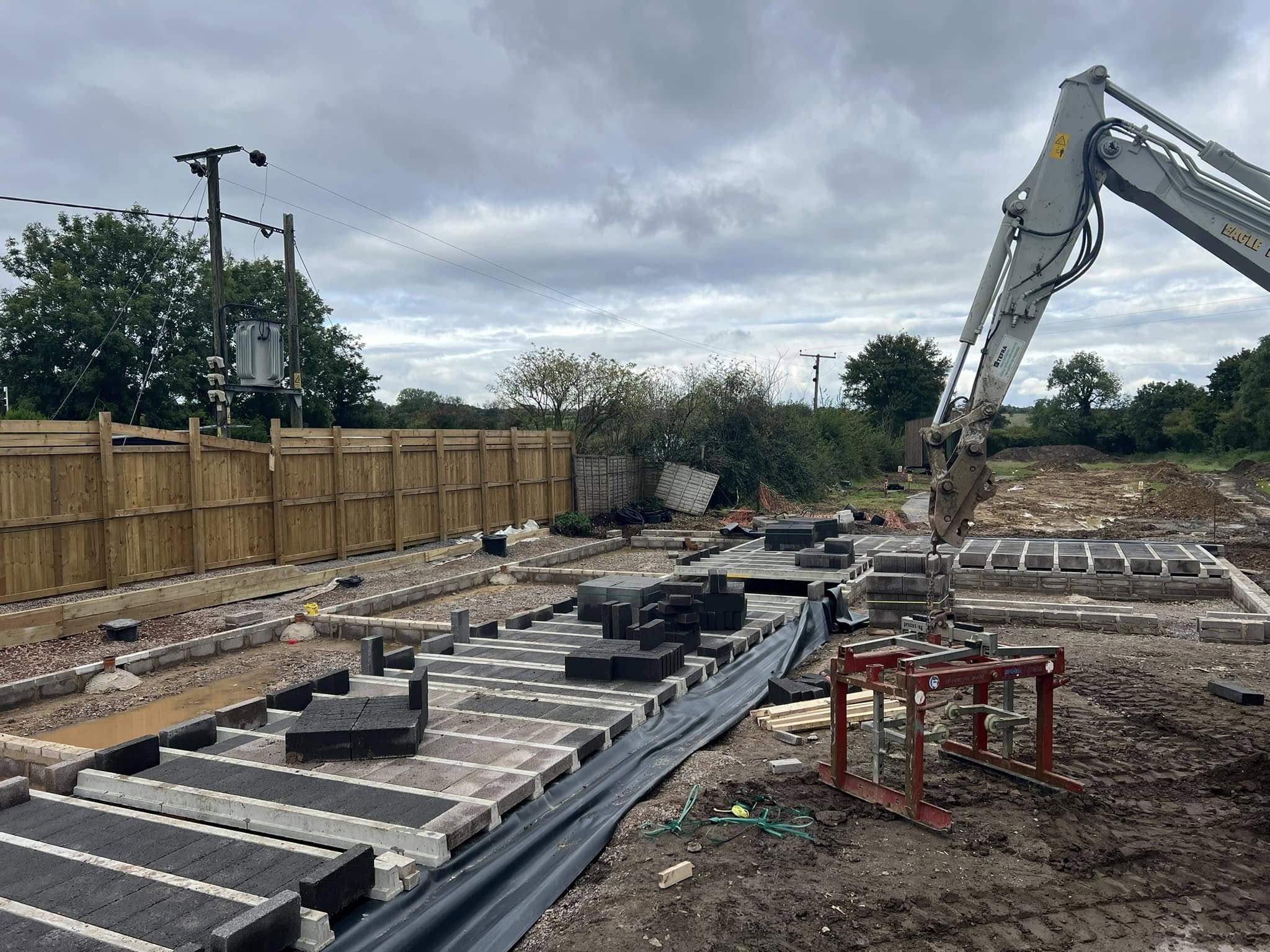
Foundations in Warminster
Strong, well-constructed foundations are critical to the success of any build. At DK Groundworks & Construction, we design and install tailored foundation systems across Warminster and Wiltshire, ensuring every project receives the structural support, ground preparation, and long-term stability needed for safe, compliant construction.
D K Groundworks & Construction
Setting the Scene for Successful Developments in Warminster & Wiltshire
Get development projects off to the right start by partnering with our established groundworks company, Warminster-based DK Groundworks & Construction. We serve domestic, commercial, and industrial clients across Wiltshire, with over 35 years’ experience creating high-quality foundations and footings tailored to your project’s needs.
Our expertise spans everything from small-scale residential extensions to large-scale schemes delivering scores of new build homes. We’re truly versatile, with qualified staff and well-maintained plant machinery to complete work within strict, competitive timeframes. Read on to learn more about the types of foundations and footings we design and build. Alternatively, browse our website to learn more about other aspects of our work, from nationwide commercial drainage works to driveway construction for local homeowners.
Types of Foundations
Deep Foundations
Our groundworkers will recommend deep foundations when the surface soil lacks sufficient load-bearing capacity. These foundations transfer structural loads deep into the ground, reaching stable soil or bedrock. Typical applications include high-rise buildings, bridges, and large industrial complexes around Warminster, where ensuring stability and durability is paramount.
Raft Foundations
Raft foundations, also known as mat foundations, are used when soil conditions are weak and call for load distribution over a larger area. These foundations support entire structures by spreading the load evenly, making them ideal for commercial buildings, schools, and large residential developments.
Pad Foundations
Pad foundations consist of isolated footings that support individual columns. They are often used for framed structures such as office buildings, where each column requires an independent foundation. These foundations prevent differential settlement and ensure structural integrity over time.
Strip Foundations
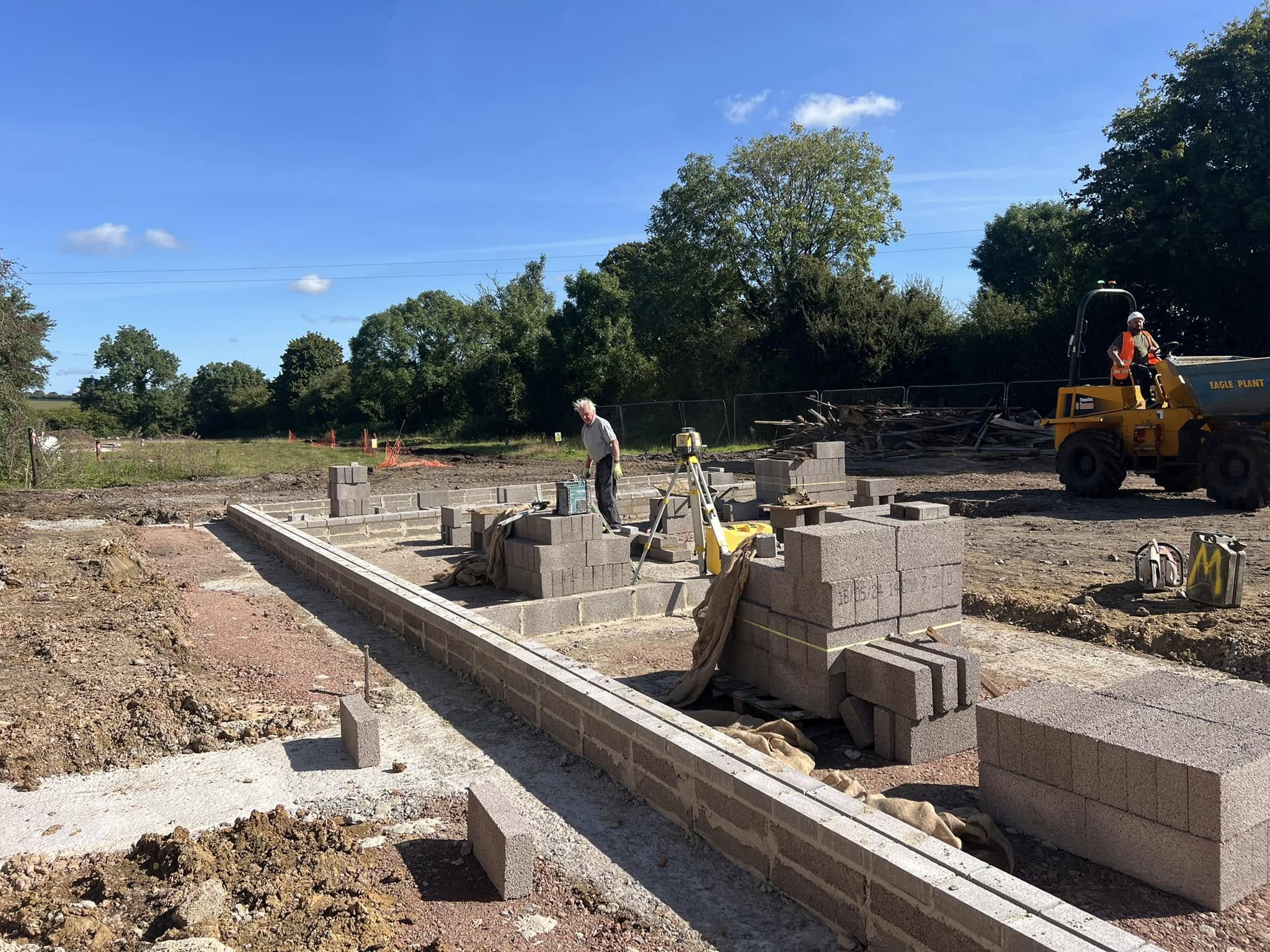
Strip foundations are long, continuous footings that support linear loads such as walls. Our groundworks company typically constructs them for residential projects in Warminster, Salisbury, and the surrounding areas, as they provide a cost-effective, stable base for structures such as houses, extensions, and low-rise commercial buildings.
Caisson & Pier Foundations
Caisson and pier foundations are both deep types used in underwater construction and bridge piers. These cylindrical structures are sunk into the ground and filled with concrete to create a solid base. They are frequently used in marine environments, supporting structures subjected to heavy loads and water-related challenges.
Shallow Foundations
Shallow foundations are built close to the surface and are used when the soil has sufficient load-bearing capacity near ground level. They are ideal for smaller residential and commercial buildings, reducing construction time and costs.
Slab Foundations
Slab foundations involve pouring concrete directly onto the ground, creating a monolithic base for buildings. These are particularly effective in stable soil conditions, and we commonly use them for the development and restoration of bungalows, garages, and industrial units in Warminster and Salisbury.
Basement Foundations
Basement foundations incorporate a subterranean level into the structure, providing additional usable space. These foundations must be meticulously engineered to withstand soil pressure and water infiltration, making them suitable for urban developments and high-end residential properties.
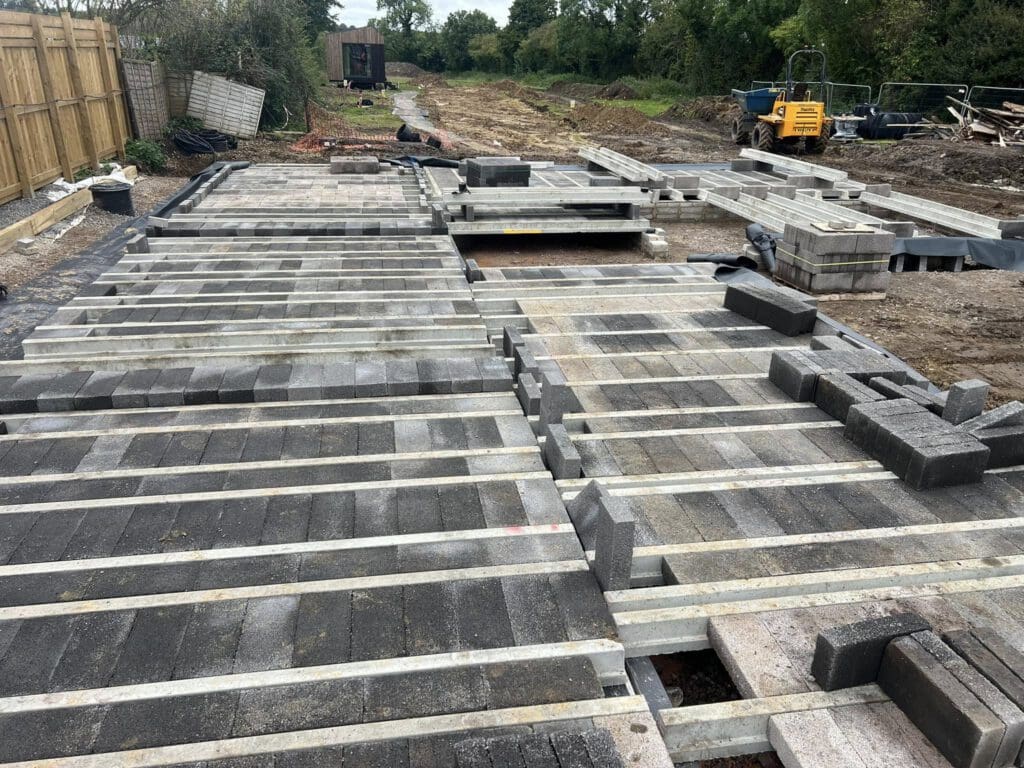
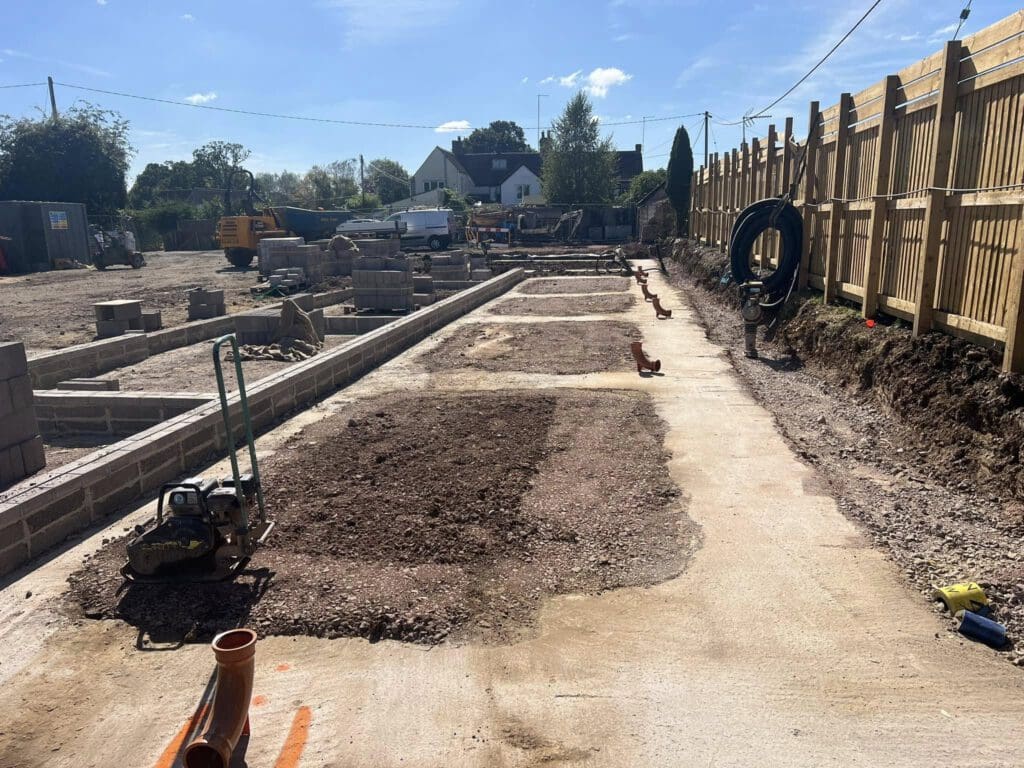
Types of Footings & Shafts
Combined Footings
Combined footings are designed when two or more columns are positioned too closely to be served by individual footings. This method distributes the load effectively, making it suitable for structures built near property boundaries or when soil conditions require enhanced load-bearing solutions.
Strip Footings
Strip footings serve a similar purpose to strip foundations but are specifically designed to support linear structural elements such as load-bearing walls. They are often used in the construction of new homes (something our groundworkers specialise in), rear and side extensions, and multi-storey residential buildings.
Spread Footings
Spread footings distribute structural loads over a wide area to prevent excessive settlement. They are widely used for individual columns in warehouses, manufacturing plants, and public buildings where stability and longevity are essential.
Applications of Our Foundations
Our groundworks contractor’s expertise extends across a broad range of construction projects, not just in local Warminster and nearby Salisbury, but throughout Wiltshire and even nationwide (for higher-value projects). All our foundations and footings are tailored to the site’s structural and environmental demands. Common projects we tackle include:
- Domestic Projects: Swimming pools, new build homes, rear extensions, side extensions, single-storey extensions, double-storey extensions, and flats.
- Commercial Buildings: Offices, schools, council buildings, hospitals, and hospitality buildings.
- Industrial Structures: Warehouses, factories, and heavy-duty commercial premises.
By assessing soil conditions, structural requirements, and long-term durability, we ensure that each foundation is engineered for optimal performance. Whether working on a small-scale home extension or a multi-storey commercial project, our team delivers foundations that provide stability and longevity.
FAQs – Foundations
The most suitable foundation depends on ground conditions, load requirements, and the type of structure being built. Options such as strip, raft, or deep foundations are selected based on site surveys and engineering recommendations to ensure long-term stability. Our team at DK Groundworks & Construction will be happy to advise you based on our vast industry experience.
Foundation installation timelines vary with project size and complexity, as well as ground conditions and weather. Smaller domestic projects may take a few days, while larger commercial or industrial developments can take several weeks to complete.
Underpinning is a method used to strengthen or stabilise existing foundations by extending them deeper or wider. It is typically required when a structure shows signs of subsidence, when the original foundations are no longer adequate, or when additional load is introduced through extensions or structural alterations.
Signs that underpinning may be required include visible cracks in walls, uneven floors, sticking doors or windows, and ongoing structural movement. DK Groundworks & Construction can carry out underpinning works to stabilise and strengthen existing foundations, preventing further movement and restoring long-term structural integrity.
Contact Our Team Today
With 35+ years of experience as a leading groundworks contractor covering Warminster and the surrounding areas, we pride ourselves on technical excellence, reliability, and customer-focused service. For expert advice on foundations and footings, contact DK Groundworks & Construction today on 07711 160067 or complete our online contact form.